

Partial Reclad or Full Reclad? What Decides It
What a partial reclad is, when one or two walls can be enough, how the cost compares with a full reclad and how consent works in Auckland.
Adron Construction
22 October 2026
5 min read
THE QUICK ANSWER:
A partial reclad replaces the cladding on one or two sides of a house and leaves the rest as it is. It tends to make sense when testing shows the damage is confined to those sides and the other walls are sound. It costs less than a full reclad, but not in proportion to the number of walls, because costs such as design and site set-up are paid once, however many walls are done. Whether it needs a building consent depends on the job, so it's worth asking the Council early.
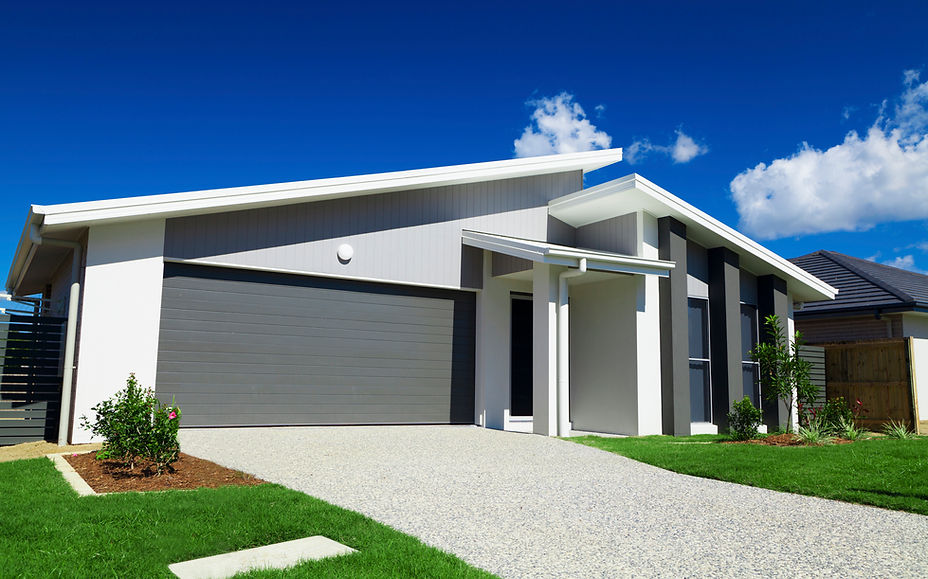
The test results come back and the damage is all on one side of the house. Does that mean one wall gets done, or the whole house? A partial reclad can be exactly the right size of job. It can also leave the real problem in place. It's worth knowing what makes the difference before anything is decided.
What a partial reclad is
A partial reclad replaces the cladding on one or two sides of a house and leaves the others as they are. It isn't a patch. A targeted repair fixes a spot, such as a window corner or where a deck meets the wall. A partial reclad takes a whole wall back to the framing and rebuilds it. A full reclad does that to every wall.
The stages for each wall are the same as on a full job: scaffold and wrap, old cladding off, framing checked and repaired, new cladding on. Our guide to the signs your house needs recladding explains how testing shows whether a house needs a repair, a partial reclad or a full one.
What the testing needs to show
Rebuilding some walls and leaving others only works if the walls being left are known to be sound. So the results for the walls that stay matter as much as the results for the walls being rebuilt. MBIE's guide to the diagnosis of leaky buildings treats moisture meter readings as indicative only, which means a clean reading on a wall isn't proof that it's dry. Our guide to weathertightness reports explains what a report covers and how to read it.
There's a limit that no amount of testing gets around. Auckland Council's guide to applying for a reclad building consent says the extent of any decay isn't known until the timber is exposed. The walls being rebuilt get opened up and the others don't, so for the walls being left, the testing is all there is to go on. Our guide to how we quote a reclad explains the levels of investigation that come before a price.
When each option tends to make sense
A partial reclad tends to make sense when the damage is confined to one or two sides, often the sides that take the most weather, and the other walls have tested sound. It also tends to suit houses where the problem is a specific fault rather than a flaw in how every wall was built, and where the cladding on the remaining walls has years of life left.
A full reclad tends to make sense when the damage turns up on several sides, or when the problem is how the walls were built. Plaster-style cladding fixed straight to the frame, with no cavity behind it for water to drain down, is the usual example, and damage in a house like that tends to appear on more than one side. Some owners choose a full reclad for a different reason: they want every wall covered by one new sign-off and one set of paperwork. Others choose a partial reclad because it's what the budget or the timing allows, and plan to deal with the other walls later.
Whichever way it goes, the test results show what's possible for the house.
What a partial reclad costs compared with a full one
A partial reclad costs less than a full one, but not in proportion to the number of walls. Some costs don't shrink when fewer walls are done: the design, the site set-up, and a good part of the scaffold and wrap. So a partial reclad usually costs more than the wall count alone would suggest, and doing the remaining walls later means paying for some of those again.
Our reclad cost guide covers what a full reclad costs and what moves the price. For a partial reclad, as for a full one, the figure stays a range until the walls are opened.
Consent and paperwork
Whether a partial reclad needs a building consent depends on the job. Schedule 1 of the Building Act exempts some repair and maintenance work from consent, and our guide to reclad building consent in Auckland goes through where the line sits. MBIE has also published Determination 2024/019, a ruling on a partial reclad of a Titirangi house. The owners asked their council for an exemption from consent and were refused, and the determination confirmed the council's decision.
Every job is different, so it's worth asking the Council before the work is designed. Auckland Council's guide strongly advises a pre-application meeting for several kinds of work, including targeted or discrete repairs, though it isn't compulsory.
What a partial reclad leaves behind
The walls that aren't reclad stay as they are. That's fine if they tested sound, and a reason to keep a closer eye on them if the results were unclear.
New cladding beside old can look different, so where the new meets the old is worth planning with the designer. The sign-off at the end covers the work that was done, and the walls left alone aren't part of it. If those walls are reclad later, that's a separate job with its own scaffold, its own paperwork and its own sign-off.
Questions people ask
Can I reclad just one wall? Yes, it can be done. What decides it is whether the testing shows the rest of the house is sound.
Is a partial reclad the same as a repair? No. A repair fixes a spot, and a partial reclad rebuilds a whole wall from the framing out.
Do I need plans and tests for a partial reclad? The tests come first, because they show how big the job is. If consent is needed, the Council asks for drawings and weathertightness details, which our consent guide above covers.
Does a partial reclad take less time? Usually, because fewer walls are opened. The stages are the same for every wall that's done. Our guide to how long a reclad takes goes stage by stage.
Not sure whether the damage is on one wall or all of them? Send us three photos for a free visual inspection: one of a window corner, one of the wall below a sill, and one where the deck or balcony meets the wall. Text them to 021 701 664 or email info@adronconstruction.co.nz, and we'll write back with a straight read on what we see and what it might mean for how much of the house is involved. It's a visual read only, so there's no site visit and no charge.
For the whole process, see our complete recladding guide, or read about how we approach residential recladding in Auckland.

This article is general information for Auckland homeowners, not professional advice. Building Code requirements, council processes and costs change over time and vary by property. Always confirm the current requirements with Auckland Council or a suitably qualified professional before making decisions about your home. Information was accurate at the time of writing.
Built to Last. Guaranteed.
Whether you're dealing with a leak, weighing up a reclad or renovation, or need remediation work, the right first step is the same: a straight answer about your building from people who do this every day.
Adron Construction is an NZCB member offering the insurance-backed Halo 10 Year Residential Guarantee, with every project consented and completed through to its Code Compliance Certificate.
Start with a free on-site assessment. No pressure, just a clear read on what your home needs and what it will take.
